
TRAFFIC ACCIDENT RECONSTRUCTION SERVICES PTY LTD
Accident Reconstruction is the effort to determine, from whatever information is available, how the traffic accident occurred. Describing the events of the accident, in appropriate detail, is the aim of accident reconstruction.
Driving strategy and evasive tactics may be inferred in reconstruction from descriptions of position and movement. This is done by relating velocity and position of one vehicle or pedestrian to another, or relating velocity and position to features of the surroundings, such as view obstructions, grades, curves and traffic control devices.
Traffic Law violations are mainly a matter of driving strategy, for example, position on the road, speed and signalling to turn or stop. Laws specify what drivers and pedestrians must do or not do in using roads. Therefore, when one has determined by accident reconstruction how the road was used, determining whether the use violated some law follows naturally, but is often inconclusive.
Who was driving may also be in accident reconstruction. Sometimes the question of which vehicle occupant was at the wheel when the accident occurred is in dispute or is not sufficiently answered by rep orts of informants. Then an analysis of occupant injuries, positions of bodies and expected vehicle movement to its rest position can lead to useful conclusions.
Reconstruction suggests circumstances or conditions that were contributing factors, that is, had they been different, the accident would not have occurred.
If there were no eyewitnesses of the collision, reconstruction can sometimes form useful conclusions about how the accident happened from the results of the accident, such as marks on the road and damage to vehicles.
When two or more eyewitness informants differ greatly in reports of their observations, reconstruction can be very helpful in deciding which of their reports to believe or in some cases, whether to believe any of their reports.
Always remember that the results of reconstruction are opinions. Like any conclusions, they are more or less accurate and more or less credible depending on the information on which the reconstruction is based, on who does the reconstruction and on the circumstances under which they were made.
The reconstruction report will include a listing of the data on which the conclusions were based, explaining any scientific principles involved, describing, at least in a general way, the reasoning leading from the data to the conclusions, and finally evaluating the accuracy and reliability of the conclusions expressed. This report may include maps, drawings, computer simulations, computer animations, rendered still photographs.
These items direct attention to the facts available and explain more fully the conclusion. Reconstruction essentially interprets data gathered in lower levels of investigation.
WHAT IS ACCIDENT RECONSTRUCTION?
A. Criminal and\or Civil Cases
When a driver is charged with culpable homicide or reckless and\or negligent driving, the state must proof that the driver drove his vehicle in a willful and wanted disregard to the safety of other road users. This has to be proven beyond a reasonable doubt.
Defense attorneys will try to proof that the driver drove his vehicle like a prudent driver, by driving inside the legal speed limit, by keeping a proper lookout, by keeping a safe following distance and so on.
In civil cases it is easier as a case is won or loose on the balance of probabilities. In civil cases there might also be contributing negligence and a proportion of liabilities.
It is clear from the above that speed plays a huge role in the determination of recklessness and\or negligence.
1. Pedestrian, motorcycle and cyclist accidents.
In pedestrian accidents the court wants to establish if a driver kept a proper lookout. Did he reduce speed when he first saw the pedestrian? Did the pedestrian run or walk across the road? How far away was the vehicle from the pedestrian when the pedestrian started to cross the road?
The time it took a pedestrian to move from the pavement into the road and up to the point of impact can be established by using a similar aged pedestrian to cross the road and time him\her with a stopwatch. Velocity is equal to distance divided by time. By changing speed that is measured in km\h to velocity that is measured in meters per second, the time the driver had to avoid the pedestrian can be calculated. It has to be taken into account that it takes 1.5s perception\reaction time for a driver to apply emergency brakes and 1 second to swerve.
It is possible to determine the time it will take a vehicle, travelling at a speed, inside the legal speed limit of the specific road, to skid to a complete stop. If the calculated time, plus the perception\reaction time is too little, the driver of the vehicle cannot be held accountable for the accident.
If, however there was adequate time for the driver of the vehicle to have stopped in time, but due to his\her excessive speed, the driver can be found guilty of reckless driving.
The speed of a vehicle in pedestrian accident can be determined by the length of the skid marks left on the road surface, by using the skid to a stop formula. In the case of vehicles with ABS that leaves no skid marks, the speed of the vehicle can still be determined using projectile motion analysis whereby the distance the pedestrian was flung through the air till its landing becomes essential.
In motorbike and cycle accidents the speed of the vehicle can also be determined by projectile motion analysis again requiring the distance the cyclist or motorbike driver travelled through the air from point of impact to landing. The launch angle of the rider is also required and sometimes the weight of the rider and vehicle involved.
2. Single motor vehicle accidents
In the event of a single motor vehicle accident for example a vehicle that went into a yaw, left the road surface and rolled. The speed of the vehicle prior to it leaving the road surface can be determined from the radius of the yaw marks left by the vehicle on the road surface. The driver of the vehicle may have exceeded the critical curve speed of the curve he\she is trying to negotiate. The critical curve speed is the maximum speed a vehicle can safely negotiate a turn based on the radius of the curve.
When a vehicle leaves the road surface and collided with a fix object for example a tree, the speed of the vehicle can be determined through crush analysis. In these cases, the amount of crush damage that a vehicle sustained must be accurately measured. Stiffness coefficients are then uses to determine the vehicle’s speed at impact.
3. Two or more vehicle accidents
In cases where two vehicles collide and there are pre-impact skid marks by either or both vehicles involved, the skid to a stop formula cannot be used to determine the speed of the vehicles involved as the vehicles did not skid to a stop, but collided with each other.
Linear momentum equations can be used where one vehicle collided with another head on or rear end. In these cases, the weight of the vehicle and its occupants are required.
In accidents at intersections where vehicles collide at an angle, the speed of both vehicles at impact can be determined by using any angle momentum equations. In these cases, the weight of the vehicles including occupants, the approach angle and departure angle of each vehicle, the distance the gravitational center points of the vehicles travelled from point of impact to its final rest positions is required.
________________________________________________________________________________________________________________________

________________________________________________________________________________________________________________________
B. The importance of a scale plan
A scale plan of an accident scene allows a reconstructionist to accurately plot the point of impact, the skid marks and the final rest positions of the vehicles involved. Accurate measurements can be obtained from the scale drawing which are used in above-mentioned formulas to determine speed. With the damage profile of vehicles, the principle direction of force can be determined and the vehicles placed in the exact position it was in relation to one another at point of impact.
CONCLUSION
It is clear from the above that an accident scene contains an enormous amount of physical evidence that can be used by a reconstructionist in determining speed and ultimately liability in any traffic accident. It therefore of extreme importance that whoever attends to an accident, to record, photograph and measure all the evidence on the scene and to draw a scale plan of the accident scene.
The damage to vehicles must also be recorded and photographed in order to determine the principle direction of force.
When a reconstructionist are instructed to do a reconstruction years after the accident occurred, the reconstructionist have to measure the road layout in order to draw a scale plan of the road layout at the accident scene. He\she then uses the SAPS sketch plan and the key to plan if available and by using the same fix point\s as the SAPS draughtsman plot the accident scene to scale on the road layout that was drawn to scale.
It is important for persons involved in serious and fatal accident to appoint a lawyer to defend them if necessary or a lawyer that specializes in claims against the RAF as soon as possible after the accident. This will allow the lawyer to appoint a reconstructionist as soon as possible in order for the reconstructionist to attend to the accident scene.
The reality is that accident reconstruction is a science, but it is in most cases possible to determine exactly how and why an accident occurred and who was to blame.
Examples of traffic accident reconstruction case compiled by TAR Services.
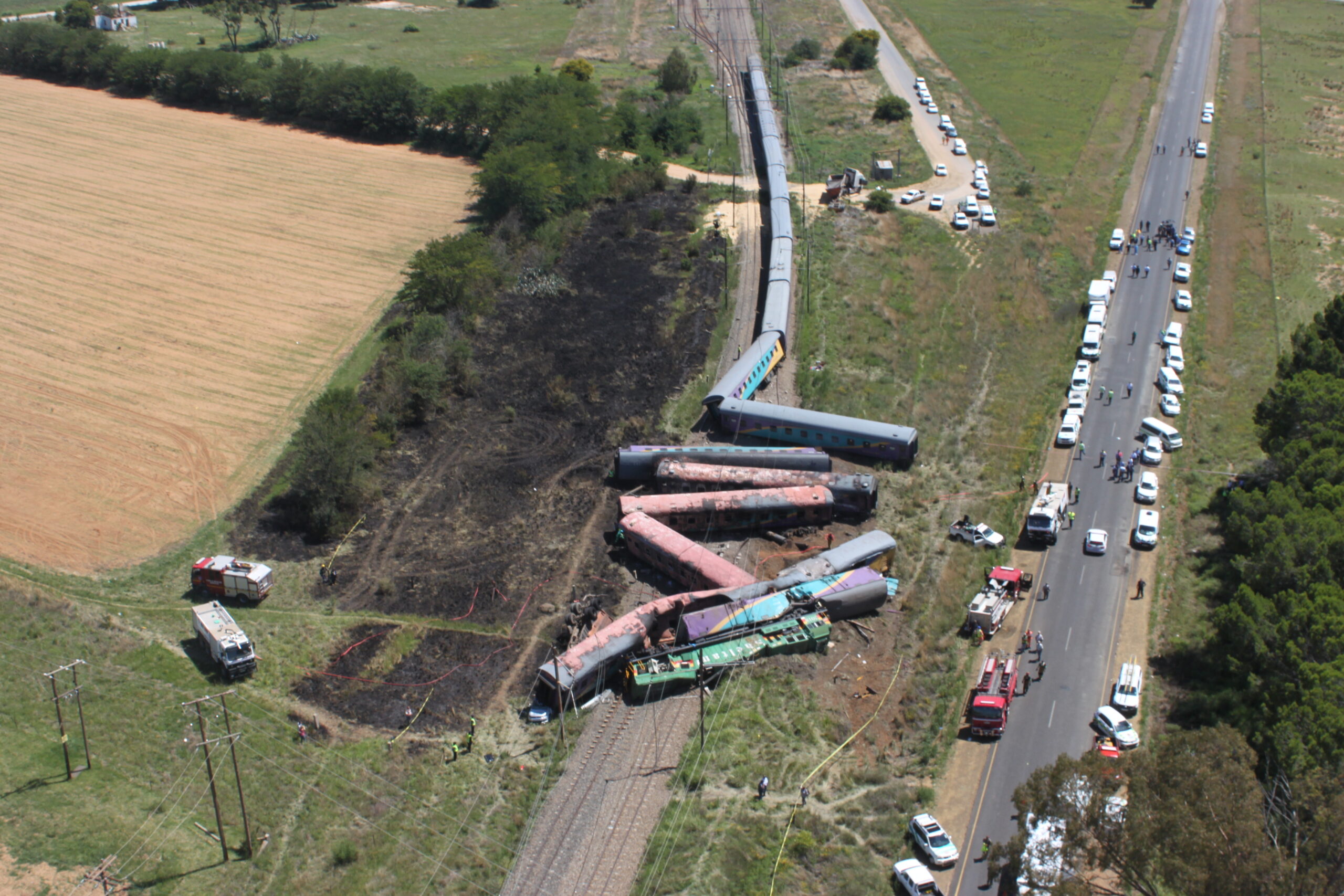
Example of High Profile case reconstructed by TAR Services.
________________________________________________________________________________________________________________________
Johan Joubert
MD: TAR Services
Cell: 082 650 9620
Email: jjoubert@tarservices.co.za
Martin Graham
Mechanical Analyst
Cell: 072 190 4448
Email: Martin Graham@mweb.co.za
_______________________________________________________________________________________________________________________
________________________________________________________________________________________________________________________