
HIGH PROFILE COURT CASES
HIGH COURT OF NAMIBIA MAIN DIVISION, WINDHOEK
JANDRÉ LODEWYK DIPPENAAR APPELLANT
STATE RESPONDENT
Heard: 6 June 2025
Delivered: 5 December 2025
Appeal of accused found guilty on 6 counts of murder and sentenced to 15 years resulting from a motor vehicle accident dismissed. The conviction stands and the sentencing stands.
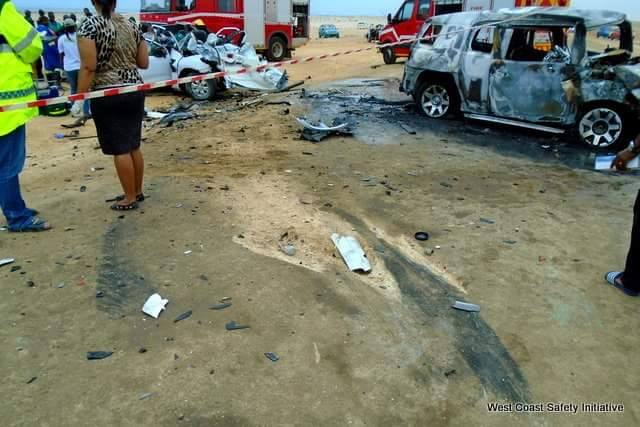
Fly note: Appeal against conviction and sentence – Evidence – Expert witness – Counsel for the appellant contending that court a quo ignored or attached insufficient weight to expert witnesses’ testimonies –
Court a quo rejecting expert witnesses’ testimonies and instead accepting those of eye witnesses –
Proper approach being that direct and credible evidence of what happened in collision generally carrying greater weight than opinions of experts –
An expert’s views of what might have occurred must give way to the assertions of direct and credible evidence of an eye witness –
Only where such direct evidence of an eye witness so improbable that its very credibility is impugned that expert’s opinion of what may or may not have occurred may persuade the court to an expert’s view point.
Criminal law – Counsel for the appellant contending that murder with dolus eventualis not proved – Test for murder with dolus eventualis stated.
Criminal Procedure – Circumstantial evidence – Whether inferences were properly drawn – Appeal court satisfying itself that inferences properly drawn –
Credibility findings – Court on appeal interfering with credibility findings of trial court only if alleged irregularities or misdirection shown – Duty to deal with the rejection or acceptance of evidence lying primarily with the trial court –
No irregularities or misdirection having been shown or being apparent from the record. Criminal Procedure – Sentence – Appellant contending among other things that sentence inappropriate and inducing a sense of shock – Punishment pre-eminently a matter for the discretion of the trial court –
Powers of court of appeal to interfere with sentence limited – Interference only permissible where trial court not having exercised its discretion judicially – Or where that court misdirected itself on facts material to sentencing or on legal principles relevant to sentencing in this matter appropriate in circumstances.
Summary: The appellant was convicted in the Regional Court sitting in Swakopmund, among other things, of reckless driving, contravening section 80 (1) of the Road Traffic and Transport Act 22 of 1999 and sentenced to N$8000 fine or, in default of payment, two (2) years’ imprisonment. He was further convicted on six (6) counts of murder with dolus eventualis arising from the collision of motor vehicles. The six counts were taken together, and he was sentenced to 15 years’ imprisonment. The appellant was dissatisfied with the conviction and sentence, hence the appeal. Grounds of appeal, among other things, counsel for the appellant contended that the court a quo ignored, rejected or attached less weight to the evidence of expert witnesses as opposed to the evidence of eyewitnesses’ testimonies.
Held: The proper approach to dealing with expert witness testimony vis-à-vis the eyewitness testimony includes the consideration that direct and credible evidence of what happened in the collision generally carries greater weight than the opinion of an expert witness. An expert view of what might have probably occurred in a collision must give way to the assertions of the direct and credible eyewitness. It is only where such direct evidence of an eyewitness is so improbable that its very credibility is impugned that an expert’s opinion as to what may or may not have occurred can persuade the court to the expert’s view.
Held: The court a quo correctly drew inferences consistent with the proven facts. The court made credibility findings. It is trite that the discretion to accept or reject evidence lies primarily with the trial court. The court of appeal can only interfere with the exercise of the discretion by the trial court if irregularities or misdirections have been shown or are apparent from the record. The court found no misdirection on the trial court’s part.
Held: Punishment is pre – eminently a matter for the discretion of the trial court; the powers of the court of appeal are limited. The court of appeal can only interfere with the exercise of the discretion of the trial court where the trial court failed to exercise its discretion judicially, when the court a quo misdirected itself on facts material to sentencing or on legal principles relating to sentence. Under the circumstances, the sentence imposed on all counts is appropriate, and it does not induce a sense of shock. No misdirection on the part of the court a quo is found.
________________________________________________________________________________________________________________________
ORDER
________________________________________________________________________________________________________________________
1. The appeal against conviction in respect of counts 1, 4 to 9 is dismissed.
2. The appeal against sentence in respect of counts 1, 4 to 9 is dismissed.
________________________________________________________________________________________________________________________

CRASH DRIVER GETS 15 YEARS IN PRISON ON MURDER CHARGES
Namibian – Adam Hartman – 23/08/2024
In a landmark ruling, magistrate Gaynor Poulton on Friday sentenced Jandre Dippenaar to 15 years in prison on six counts of murder in connection with the fatal road collision in which he was involved in December 2014.
Dippenaar’s case is the first in Namibia’s legal history in which a road accident has led to a murder conviction, rather than culpable homicide.
The sentence, delivered in the Swakopmund Regional Court, comes nearly a decade after the fatal collision that claimed the lives of six people near Henties Bay on 29 December 2014.
Dippenaar was also sentenced to pay a fine of N$8 000 for reckless driving and a fine of N$2 000 for driving without a valid license.
He was found guilty of overtaking vehicles at high speed on a blind rise near Henties Bay, in a manoeuvre that led to a head-on collision with another vehicle.
The crash resulted in the deaths of three passengers in Dippenaar’s car and three members of a visiting German family.
________________________________________________________________________________________________________________________
SWAKOPMUND REGIONAL COURT
Magistrate Gaynor Paulton
Experts for the State:
Mr Johan Joubert and Mr Martin Graham of TAR Services.
Experts for the Defense
Mr Stanley Bezuidenhout of IBF Investigations and
Mrs Wilma Badenhorst of FRCIS.
‘DIPPENAAR HET ONGELUK VEROORSAAK’
10 October 2018 | Howe
REPUBLIKEIN
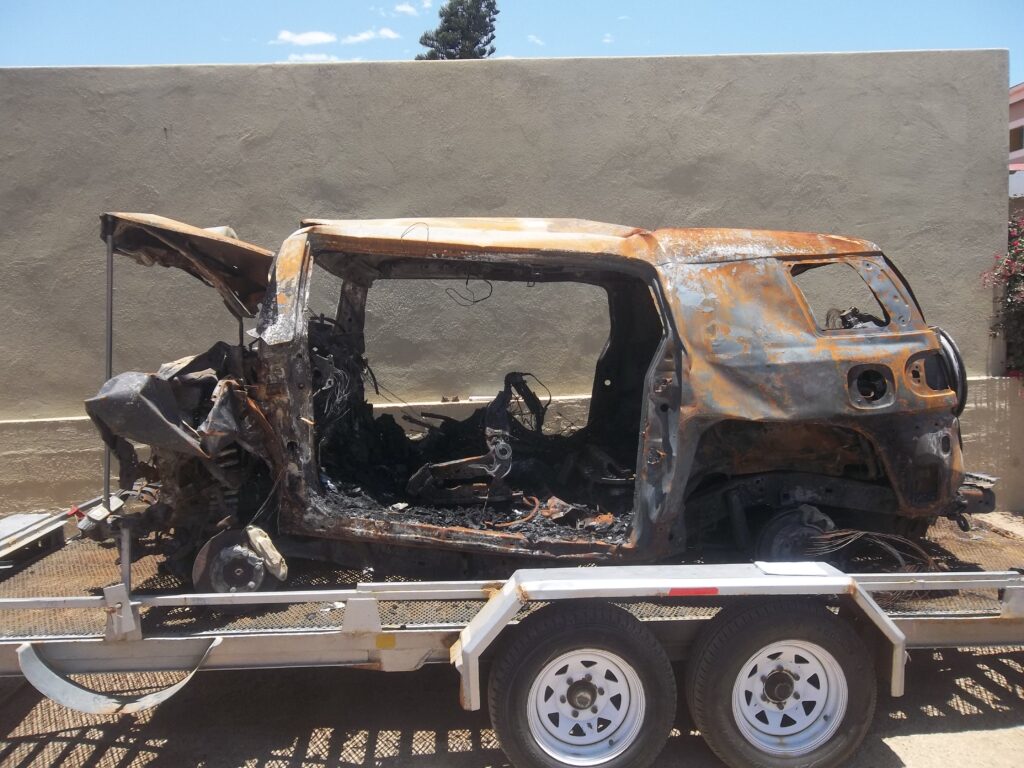
Erwin Leuschner op Swakopmund – Die gru-ongeluk op 29 Desember 2014 naby Hentiesbaai wat die lewe van ses mense geëis het, “is deur die bestuurder van die Toyota FJ Cruiser veroorsaak”.
Dít was gister die woorde van die Suid-Afrikaanse ongelukkenner en deskundige op die gebied van ongelukrekonstruksie, mnr. Johan Joubert, in die verhoor waarin mnr. Jandré Dippenaar op moord teregstaan.
Joubert het sy getuienis in die streekhof op Swakopmund gister afgesluit met die gevolgtrekking die “nalatige bestuursgedrag” van Dippenaar het tot die ongeluk gelei.
Dit is vervat in sy lywige ongelukverslag van meer as 100 bladsye waarin hy elke aspek van die gru-ongeluk in die fynste besonderhede ontleed het.
Joubert het nie net die fisieke getuienis ontleed nie, maar ook die getuienis van verskeie getuies ingesluit.
“Dit is duidelik die FJ Cruiser het teen ‘n hoë spoed gery en drie voertuie op ‘n blinde hoogte verbygesteek,” sê Joubert.
Hy het Maandag getuig hy het dié voertuig se spoed kort voor die ongeluk op daardie noodlottige dag op 147,6 km/h bereken, terwyl die maksimum toelaatbare spoed op die Swakopmund-Hentiesbaai-soutpad 100 km/h is.
Die spoed van die aankomende Ford Ranger waarteen hy gebots het, was volgens die ingeboude GPS in dié voertuig 85 km/h.
“Uit die bostaande is dit duidelik die oorsaak van die ongeluk was die roekelose bestuursgedrag van die bestuurder van die Toyota FJ Cruiser, mnr. Jandré Dippenaar. Sy roekelose verbysteek van drie voertuie op ‘n blinde hoogte het die bestuurder van die Ford Ranger genoodsaak om voorkomende stappe te doen en hy het aan die verkeerde kant van die pad beland (die regterkant van die pad vir voertuie wat in die rigting van Swakopmund ry),” skryf Joubert in sy verslag.
Hy gaan voort en sê: “Die roekelose bestuursdrag van mnr. Jandré Dippenaar het volgens die getuienis tot die dood van ses mense gelei, met die enigste oorlewendes van dié ongeluk mnr. Dippenaar en me. Antonia Joschko.”
Joubert het gister herhaal wat hy die vorige dag gesê het, naamlik dat die bestuurder van die Ford Ranger “geen ander keuse gehad het nie as om na regs te swenk in ‘n poging om ‘n botsing met die FJ Cruiser te vermy nie”.
Sy verslag is deur verskeie sketse aangevul van hoe die ongeluk plaasgevind het.
Dippenaar se regsverteenwoordiger, adv. Louis Botes, het gister vir ‘n elektroniese weergawe van die sketse gevra sodat die verdediging dit kan bestudeer.
“Die gedrukte weergawe (A3-grootte) is só klein dat ons met ‘n liniaal moet speel om ons berekeninge te maak. En dit kan nie akkuraat wees nie,” het Botes aangevoer.
Joubert het egter geweier om sy data beskikbaar te stel en het aangevoer die verdediging het hul eie deskundige aangestel en hy voel nie verplig om dit met hulle te deel nie.
Landdros Gaynor Poulton het gelas hy hoef dit nie elektronies beskikbaar te stel nie, maar versoek dat hy dit in ‘n groter formaat uitdruk.
Dít het gister en eergister tot verskeie verdagings gelei. Die verhoor duur vandag voort.
________________________________________________________________________________________________________________________